







Search Results for: Milk Washing

Espresso Special Milk-Washed Latte Making Guide: Ingredient Ratios, Step-by-Step Details, and Practical Recipe
Milk washing is a process that involves mixing an acidic ingredient with milk to curdle the casein, then filtering out a transparent milk serum. Thanks to its striking visual presentation and unique mouthfeel, it is used by many coffee shops in the making of specialty coffee drinks. However, although the process is not complicated, there are quite a few details to pay attention to. If you simply add an acidic substance and coffee directly to milk, the resulting clarified liquid is often difficult to drink as is. To make a good-tasting milk-washed coffee, in addition to the basic ingredients, flavoring components such as sugar are needed to balance the acidity, while the choice of coffee beans, the usage ratio, and the steeping time will all significantly affect the final flavor. This article will cover the ingredients, steps, and recipes for milk washing, and share Front Street Coffee's specific recommendations on bean selection. [more…]

What is the principle behind milk-washed coffee? How to make a clarified latte with milk and espresso, plus the method and recipe ratios
When most people think of a combination of milk and espresso, the first things that come to mind are classic milk coffees with milk foam, such as lattes and cappuccinos. But the same ingredients, processed with a different method, can take on a completely different appearance and texture. This article introduces a technique called "milk washing"—using the principle that casein coagulates when milk meets acid to remove the fat and protein particles from milk, leaving behind a transparent whey liquid. This time, Front Street Coffee's approach differs from the usual one: during the clarification process, espresso is added directly, so that the entire drink is clarified together, resulting in a "special latte" that looks similar to pour-over coffee but has rich, layered flavors. The article will explain in detail the required materials, recipe ratios, and step-by-step instructions, making it a useful reference for enthusiasts who want to try making specialty coffee at home. [more…]

Can Milk Become Transparent? Decoding the Craft, Applications, and Market Prospects of Clarified Coffee
In the past two years, a peculiar category of drinks has emerged in the world of coffee specialties: they clearly contain milk, yet appear crystal clear and transparent—these are clarified coffee and transparent lattes. The clarification technique originated in the cocktail world as "milk washing," and has now been adopted by baristas in the development of creative beverages. This article will start with the principles behind clarified milk, trace its journey into the coffee scene, share a method for recreating it, and objectively analyze whether clarified coffee can become a new trend in the specialty drinks market, while also exploring its challenges regarding cost and scalability. [more…]
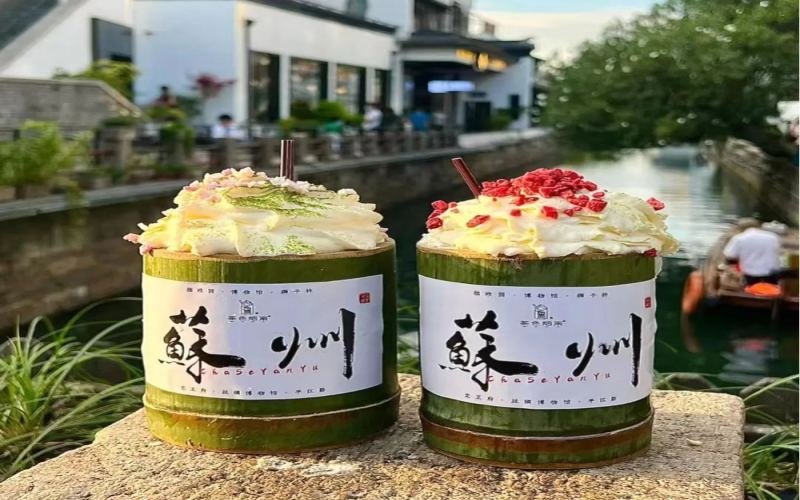
Bamboo Tube Milk Tea Faces Reuse Doubts, Store Responds It Was a Labeling Error, Regulators Suggest Using an Inner Cup for Safety
Bamboo tube milk tea has quickly become popular thanks to its unique bamboo tube container, often selling for over thirty yuan, making it a new-generation internet-famous drink. However, recently some consumers discovered that beneath the sticker on the surface of the bamboo tube there was another label, raising doubts that the bamboo tubes were being recycled and reused. The shop involved explained it as an oversight in re-sticking labels and emphasized that the cups are single-use. Previously, a video of an elderly woman washing bamboo tubes by a river in Suzhou also sparked similar discussions, and the shop likewise denied recycling. Bamboo tube material is prone to mold and cracking, and direct contact with drinks poses food safety risks. The Beijing Dongcheng Market Supervision Administration recommends placing a beverage cup inside the bamboo tube to ensure safety. This article will review the course of the incident and the responses from all parties, and append related recommendations from Front Street Coffee. [more…]

Mixue Bingcheng employee washing feet in sink sparks heated discussion, official response says it was emergency treatment for a scald
Recently, a video of a Mixue Bingcheng employee washing his feet in a sink inside the store spread rapidly online, drawing widespread attention. In the video, a man in a black work uniform is rinsing his feet in a sink behind the counter, with milk tea buckets and operating tools placed nearby, a scene that is shocking. Mixue Bingcheng later responded that the employee had scalded his foot at work and used cold water as an emergency treatment, and that the store involved had been ordered to close for disinfection and carry out rectification training. However, some netizens questioned the official explanation, saying the man's movements were calm and did not look like someone who had been scalded. The incident continued to escalate, and food safety and hygiene issues once again became the focus of public opinion. [more…]

Unveiling Milk Clarification: Transparent Latte Flavor Test and Complete Brewing Guide
At the 2021 World Coffee in Good Spirits Championship, clarified milk made a stunning appearance, but it has still not entered the coffee market on a large scale, and can only be encountered occasionally in a few specialty coffee shops. How exactly is this "milk," which looks as clear as water, made? And what would a latte made with it taste like? Front Street Coffee decided to conduct an experiment firsthand, starting from the principle of milk clarification, step by step using lemon juice and milk to make transparent milk, then trying three methods respectively—drinking it directly, adding it to espresso, and adding sugar to neutralize the sourness—for a comprehensive review of the true flavor of clarified milk latte. If you are interested in specialty coffee creations and innovative ingredients, this hands-on test record will give you a direct answer. [more…]

Analysis of the Oil-Washed Coffee Technique: From Principle to Practice, How Butter and Coconut Oil Reshape Coffee Flavor
The oil-washing method originated in the cocktail world and has now been introduced into the specialty coffee scene, becoming a new favorite among many coffee enthusiasts. It exploits differences in the freezing points of oils and fats to extract aromas from the oils into the coffee liquid, thereby giving the coffee a softer mouthfeel and richer layers of flavor. In this article, Front Street will walk through the origins of the oil-washing method, material selection, step-by-step procedures, and precautions one by one, and will use butter oil-washed Golden Mandheling and coconut oil-washed cold brew coffee as examples to demonstrate the specific production process in detail. Whether you want to DIY at home or want to understand the logic behind those oil-washed specialty drinks in coffee shops, this article can provide practical reference. [more…]

How to brew Yirgacheffe coffee beans? Luckin Yirgacheffe SOE Americano standard recipe and flavor analysis
Yirgacheffe is a representative producing region for specialty coffee in Ethiopia, known for its citrus acidity, white floral aromas, and honeyed sweetness. Front Street Coffee sells a variety of Yirgacheffe coffee beans, using a medium-light roast, suitable for pour-over, cold brew, and many other methods. This article provides a detailed analysis of Yirgacheffe's washed processing method, pour-over parameters, and flavor performance, and shares the standard steps used by Front Street Coffee baristas to make SOE espresso and iced Americano, including the coffee-to-liquid ratio, extraction time, and specific operations, helping coffee lovers replicate a delicious Yirgacheffe SOE Americano in-store or at home. [more…]

Yirgacheffe Coffee Beans | How to Brew Ethiopian Yirgacheffe Coffee? Is Luckin's Yirgacheffe SOE Americano Standard Recipe Good?
Coffee beans from Front Street Ethiopia Yirgacheffe have a very fresh flavor, especially under light roasting, showing a bright citrus-like acidity, subtle floral notes, honey-like sweetness, and a green tea-like lingering finish. And if it is used for SOE (single origin espresso), Front Street Yirgacheffe usually uses medium [more…]

Moka Pot Operation Guide: Detailed Explanation of Coffee and Water Ratios and Brewing Steps
Although the moka pot has "mocha" in its name, it has nothing to do with mocha coffee beans or chocolate flavor. It originated from the inspiration that the Italian Alfonso Bialetti drew from the design of a washing machine, and since its introduction in 1933, it has become a classic tool for quickly making espresso at home. This article provides a detailed introduction to the complete operation process of the moka pot, including the amount of water, the amount of coffee grounds, the technique for loading the grounds, the timing for heating and stopping, as well as the subsequent tasting and drinking methods. At the same time, Front Street Coffee recommends a variety of coffee beans suitable for the moka pot according to different flavor preferences, from rich nutty notes to floral and fruity acidity and sweetness, helping you easily make a cup of moka pot coffee with rich crema and a full-bodied taste at home. [more…]
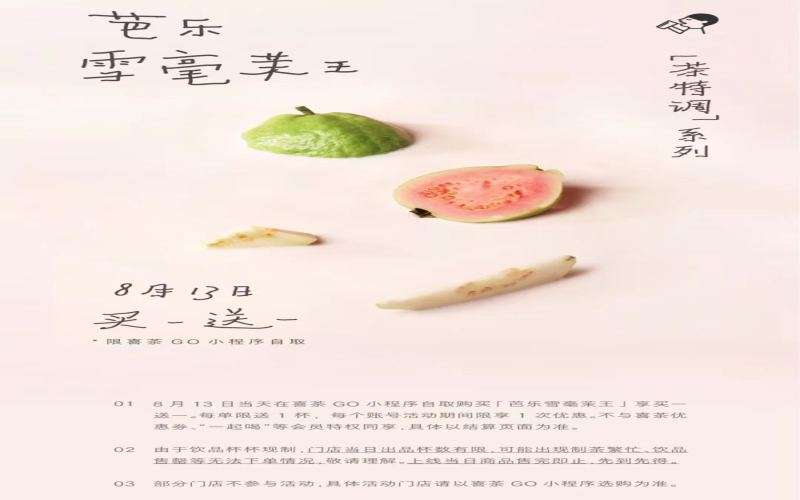
Heytea's String of New Product Launches Draws Employee Complaints: Tension Between R&D Launch Pace and Store Workload Comes to the Fore
Heytea recently announced that it will launch its first "Tea Special" product, "Guava Snow Jasmine King," on August 13, accompanied by a limited-time buy-one-get-one-free promotion, drawing widespread consumer attention. However, behind the frequent release of new products, store employees are facing increasingly heavy production pressure. According to statistics, Heytea has launched at least 7 new products in the past two months, covering categories such as milk tea, fruit and vegetable tea, and smoothies, with the menu updated almost every 1 to 2 weeks. From washing and cutting fruit to stirring cheese glutinous rice, and then to making smoothies, employees' workload keeps piling up, and a large number of complaints have appeared on social media. This article sorts out the contradiction between new product launches and employee burden, presenting the real voices behind the rapid product innovation in the tea beverage industry. [more…]

From Surfactants to Foam Stability: A Beginner's Guide to Latte Art and the Principles of Fluid Dynamics
Latte art is a romantic expression of a barista's skill, with white milk foam blooming into heart or leaf patterns on the surface of dark brown espresso. Latte art is divided into two types: free-pour latte art and etched latte art created after pouring. The wonder of the former lies in the pattern forming simultaneously with the pour, while the latter offers a wider range of designs because the stable foam allows for leisurely drawing. From a physics perspective, the core of latte art lies in surfactants—molecules that possess both hydrophilic and hydrophobic groups, capable of stabilizing the interface between air and liquid to form lasting foam. Milk proteins and coffee lipids act together as surfactants, enabling the two micron-scale foams to remain clearly separated for a long time after mixing, thereby allowing the pattern to persist. This article will guide you from the basic principles of surfactants to understand espresso's crema, the formation of hot milk foam, and why foam mixing rather than liquid mixing is the key to successful latte art, while also revealing the widespread applications of surfactants in daily life and industry. [more…]

Yirgacheffe SOE Flavor Analysis and Pour-Over Tutorial: A Complete Guide from Origin Story to Brewing Ethiopian Coffee Beans
Yirgacheffe is Ethiopia's most recognizable specialty coffee region, known for its citrus-lemon acidity, white floral aromas, and honeyed sweetness. This article begins with the origin background of Front Street Yirgacheffe, examining how the establishment of washing stations shaped its signature flavor, analyzing the soil and processing advantages of the Konga Cooperative, and answering whether Yirgacheffe is suitable for making SOE. It also provides brewing approaches for Front Street washed and natural Yirgacheffe, SOE extraction parameters, and pairing options for Americano and latte, helping coffee enthusiasts fully understand the flavor logic and practical key points of this classic region. [more…]
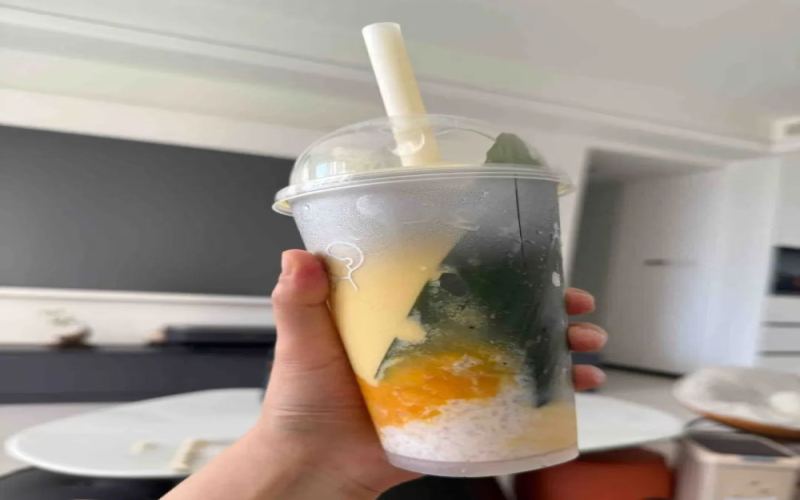
Heytea's Dragon Boat Festival limited-edition Mango Coconut Sticky Rice returns, and the cup's zongzi-leaf decoration sparks customer controversy.
During the Dragon Boat Festival, Heytea once again launched its festival-limited drink Mango Coconut Sticky Rice, a creative beverage inspired by zongzi. Since its debut in 2021, it has become a "white moonlight" that many consumers look forward to returning every Dragon Boat Festival, thanks to its combination of mango coconut milk slush, mango chunks, and freshly made sticky rice. However, a piece of zongzi leaf used as a decoration in the cup sparked dissatisfaction among some customers—some found it took up space and got in the way of stirring and sipping the toppings, while others worried that the leaf might not be cleaned thoroughly enough and posed a hygiene risk. Heytea staff responded that the zongzi leaves go through selection, washing, and disinfection processes, and that the decoration is meant to add to the festive atmosphere. As to whether this leaf is superfluous, customers and staff each have their own views. [more…]
From Origin to Extraction: A Complete Analysis of the Flavor Formation and Brewing of Yirgacheffe Coffee Beans
Yirgacheffe is one of Ethiopia's most recognizable specialty coffee regions, world-famous for its bright citric acidity, white floral aromas, and honeyed sweetness. But do you know where this unique flavor actually comes from? From the establishment of washing stations in the 1970s, to the implementation of the ECX regional grading system, to the soil secrets of the Konga cooperative, every link has shaped the classic flavor profile of Yirgacheffe. This article will systematically sort out the regional background and flavor definition of Yirgacheffe, and, combined with Front Street Coffee's actual brewing experience, break down in detail the flavor differences between washed and natural lots, as well as the extraction parameters and drinking methods for Yirgacheffe as an SOE, providing coffee lovers with a complete practical guide. [more…]
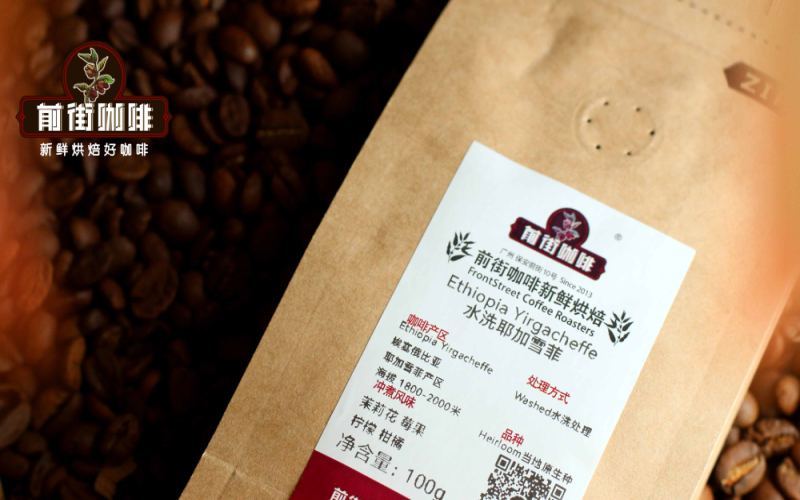
Is Yirgacheffe considered a pour-over single-origin bean? Which coffee beans should be chosen for brewing with a moka pot?
Yirgacheffe is one of Ethiopia's most distinctive coffee beans, famous for its citrusy lemon acidity and white floral notes, completely different from traditional bitter black coffee. Many coffee enthusiasts ask: is it really a pour-over single-origin bean? And if you want to brew it with a moka pot, what beans should you choose? This article starts with the origins of Front Street Yirgacheffe's growing region, the history of its washing station, and the definition of its flavor, then demonstrates the moka pot brewing steps in detail to help you find Yirgacheffe coffee beans suitable for a moka pot. [more…]
Can Yirgacheffe be classified as a pour-over single-origin bean? And which SOE is more suitable for a moka pot?
Yirgacheffe is often regarded by coffee enthusiasts as the representative of pour-over single-origin beans, but does it really count as a pour-over single-origin in the strict sense? And if you switch to a moka pot, what kind of SOE coffee beans should you choose to bring out the floral and fruity notes? This article, from Front Street Coffee's perspective, first sorts out the origins of the Yirgacheffe region and the history of its washing stations, then explains what "Yirgacheffe flavor" actually means, and finally provides specific steps and parameter suggestions for making moka pot coffee with Front Street Coffee's Natural Red Cherry SOE, helping you brew a cup of moka pot coffee with citrus, lemon, and white floral notes at home. [more…]

Squid Ink in Milk Tea? Heytea's Dark Halloween Cheezo Tea Launches Overseas First
As Halloween approaches, major beverage brands are rolling out dark-themed limited editions. Heytea in the UK was first to launch a product called Dark Cheese Tea, a cuttlefish ink salted cheese tea, available only in the UK and the US, drawing curious overseas consumers to check in and try it. However, the natural seafood fishiness of cuttlefish ink has left many people calling it a letdown after drinking it. At the same time, Heytea in China will also launch a dark slim bottle blind box event from October 28 to 30, containing three vegetable juices: celery, cilantro, and kale, full of Halloween atmosphere from taste to packaging. This article takes you through this wave of dark beverages and the real feedback. Friends who enjoy specialty coffee culture, don't forget to follow Front Street Coffee's daily shares. [more…]

A Comprehensive Analysis of the Flavor Formation of Kenyan AA Washed Coffee Beans and SOE Production
Kenyan coffee is renowned for its wild berry-like acidity and clean, bright cup profile, making it a favorite among many coffee connoisseurs. From the perspective of Front Street Coffee, this article systematically reviews the history of Kenyan coffee cultivation, its main producing regions, and grading standards, while offering an in-depth analysis of the causes behind its signature acidity—red volcanic soil, the SL28 and SL34 varieties, and the unique K72 washing process. At the same time, using Kenya Asalia coffee beans as an example, the article also shares pour-over parameters and SOE espresso preparation steps to help coffee enthusiasts recreate a full-flavored cup of Kenyan coffee at home. [more…]

Bialetti Brikka Moka Pot Operation Guide: Espresso Extraction Points and Latte Art Practice
Many coffee enthusiasts are drawn in by the convenience and ambiance of the moka pot in outdoor camping videos, only to find after buying one that consistent extraction is hard to achieve—either too weak or harshly bitter, with grind size and heating time both difficult to control. This article walks through the moka pot's structure and principles, coffee grinding and loading methods, heating rhythm, and how to use the espresso it makes for latte art, laying out the key operational points step by step. It also draws on Front Street Coffee's bean selection approach to explain how the flavor stays clear and the mouthfeel rich and balanced even after milk is added. [more…]